
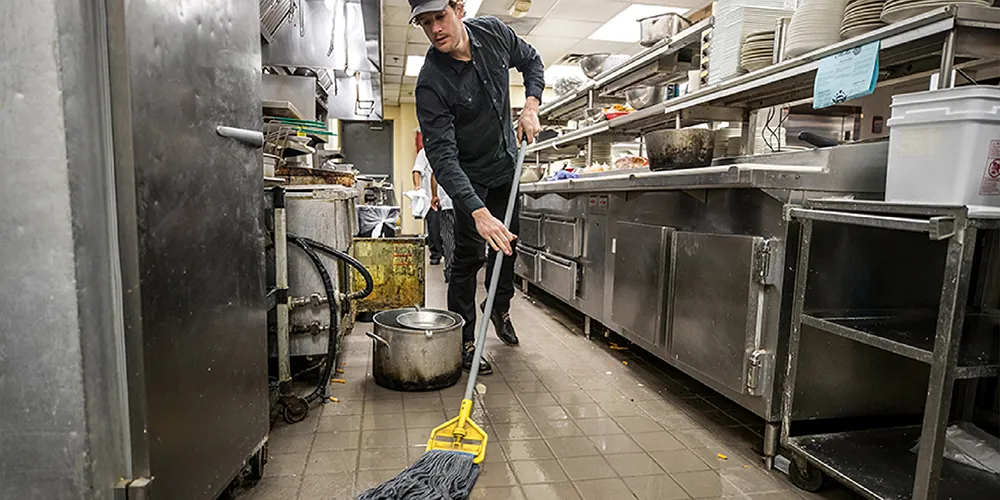
A nightly mopping routine keeps grease from hardening into grout lines.
By Florida Kitchen Pros · Updated October 2026
The short answer: For thorough commercial kitchen floor cleaning, sweep up loose debris, apply a degreasing cleaner to loosen grease while it dwells, scrub grease-prone zones with a floor scrubbing machine or stiff-bristled brushes, then hot-water rinse and air dry. Professional commercial kitchen cleaning services crews do this nightly.
In This Guide
Quick Facts
Tired of fighting greasy, slippery floors every shift? Florida Kitchen Pros deep cleans commercial kitchen floors for restaurants, hotels, and catering kitchens across Florida. One call and your floors are degreased, sanitized, and looking their best.
Mop nightly, at the end of each shift. In high-volume kitchens, grease and oil splatters harden fast, and skipping one round lets buildup set overnight. Make mopping after each shift the core of your daily maintenance: clean spills immediately, so yesterday’s grime never becomes today’s slippery residue.
Clear loose dirt, debris, and food particles with a broom and dustpan. Reach every corner and shift light equipment aside so tripping hazards don’t slow you down.
Pre-treat heavily soiled areas with a heavy-duty degreaser: hit the worst grease spots first and let it sit several minutes to penetrate. Skipping dwell time never breaks down real cooking residue; it just smears it.
Don’t skip vent zones: exhaust hoods and vents shed airborne grease far from the cooking line. exhaust hood cleaning
Quarry tile is the kitchen workhorse: dense fired clay, but its textured face and grout lines trap embedded dirt and stubborn grime.
Epoxy and sealed concrete are smooth and non-porous, but the resin finish is chemically sensitive, so harsh acids are off the menu.
Vinyl sheet, VCT, and rubber trade on comfort, but VCT demands respect: its wax finish runs on a scheduled strip-and-rewax cycle, and between cycles only neutral-pH cleaner should touch it. Harsh acidic cleaners strip the shine and cause discoloration.
Basics:
Safety gear first:
For large kitchens:
The best floor cleaner depends on your floor type, so check compatibility. An alkaline cleaner damages marble and granite. Evaluate floor condition and test new products in a small area first.
A weekly deep clean goes beyond the daily mop: one shift a week of full treatment keeps floors safe, odor-free, and guest-ready. Work off-hours: move mobile equipment aside and divide the floor into manageable sections.
1. Degrease. Hit the worst zones first (under fryers, around the line) with heavy-duty alkaline degreaser and 5–10 minutes dwell time (toward 15 for severe jobs). For extreme buildup, give chemistry extra contact time instead of scrubbing harder.
2. Scrub. Aggressive scrubbing with mechanical equipment on quarry tile and grout, in back-and-forth strokes.
3. Rinse. Non-negotiable: a full thorough rinse removes cleaner residue. Failing to rinse leaves a sticky film that attracts dirt and creates slip hazards.
4. Sanitize. Use a food-safe sanitizer with even coverage. Missed spots won’t eliminate bacteria. Follow the manufacturer’s dwell time, and final-rinse only if the label requires it. Keep ventilation running and let the floor air-dry completely before equipment goes back.

Degrease, scrub, and sanitize weekly in high-traffic zones.
The smartest way to keep a kitchen floor clean is stopping oil before it reaches the tile.
A floor collecting grease spills and standing water turns slippery fast, a safety hazard under OSHA’s walking-working-surface guidance. Handle spills immediately, drop wet floor signs on wet sections, and keep frequent degreasing in the prep routine. For new tile in wet areas, ANSI A137.1 sets DCOF 0.42+ as the accepted slip-resistance threshold.
Moisture buildup in corners, grout lines, and drains is what bacteria and mold need: damp, warm, full of food residue. Clean drains daily and deep-clean them weekly. And never blend cleaning chemicals: mixing bleach and ammonia produces dangerous fumes.
Florida’s humidity makes mold a year-round fight, which is why Florida DBPR health inspections look hard at floors and drains. A documented cleaning program, with staff initialing after each shift, shows accountability and consistent results. Tampa Bay kitchens share the same damp-air pressure year-round; a posted program with clear responsibilities tells an inspector floor hygiene is taken seriously.
DIY puts you in charge of every cost lever. Heavy traffic and rough soil conditions burn more chemical and labor than lower-volume kitchens with daily sweeping and mopping. Buying equipment means storage plus monthly maintenance; renting shifts that burden to the supplier. Cleaning concentrates beat pre-mixed jugs on value, if the team follows the recommended dilution ratio.
Outside help earns its keep when the floor crosses from dirty to damaged: persistent staining and neglected floors need tools a mop can’t deliver. Pre-inspection deep cleans are the classic trigger. Health inspections don’t forgive shortcuts. Weigh that against skipping maintenance: early identification of wear now, or expensive repairs when a failing floor becomes a full replacement.
Get a free quote for professional floor deep cleaning. Tell us about your kitchen and we will give you a clear price and schedule. Serving restaurants and commercial kitchens across Florida.
Mop daily and do a full deep clean weekly (every two weeks at minimum for lower-volume kitchens). Daily sweeping and mopping between deep cleans keeps grease out of grout.
Pre-sweep first, then alkaline degreaser (pH 10–12) at proper dilution with 5–15 minutes dwell time. Never let it dry. Scrub with appropriate tools, rinse, and dry completely.
Yes. Enzymes digest organic matter (fats, oils, food particles) and the bacteria behind drain odors. They don’t cut petroleum grease, so alternate with alkaline degreasers.
Gloves, eye protection, wet-floor signs, ventilation, and never mix incompatible chemicals. Posted cleaning-safety rules protect crew and floor.
Clean drains daily: lift the floor drain covers and scrub underneath, where most odors start. Baking soda and vinegar flushes neutralize lingering smells; an enzymatic cleaner digests buildup instead of masking it.
It depends on floor material and drainage. High pressure can force grease into cracks and splash contaminated water onto prep areas, a cross-contamination hazard. A floor scrubber with low-pressure rinse usually works better.
Bring in expert help when grease has hardened into grout, odors persist, or floors need restorative cleaning beyond your crew’s gear. A quarterly pro visit plus your own routine keeps floors in long-term shape.
Leaving cleaning solution on the floor, failing to rinse, scrubbing too aggressively on soft surfaces, and reusing greasy mop water. A dirty mop spreads contaminants into prep areas.
Florida Kitchen Pros is based in Dade City and serves commercial kitchens across Florida. Call now or request your free quote online and we will take it from there.